The Working Agreement Canvas


The canvas - see below - organizes agreements into four categories where teams typically experience friction. Use it after generating ideas to ensure you haven't missed critical areas.
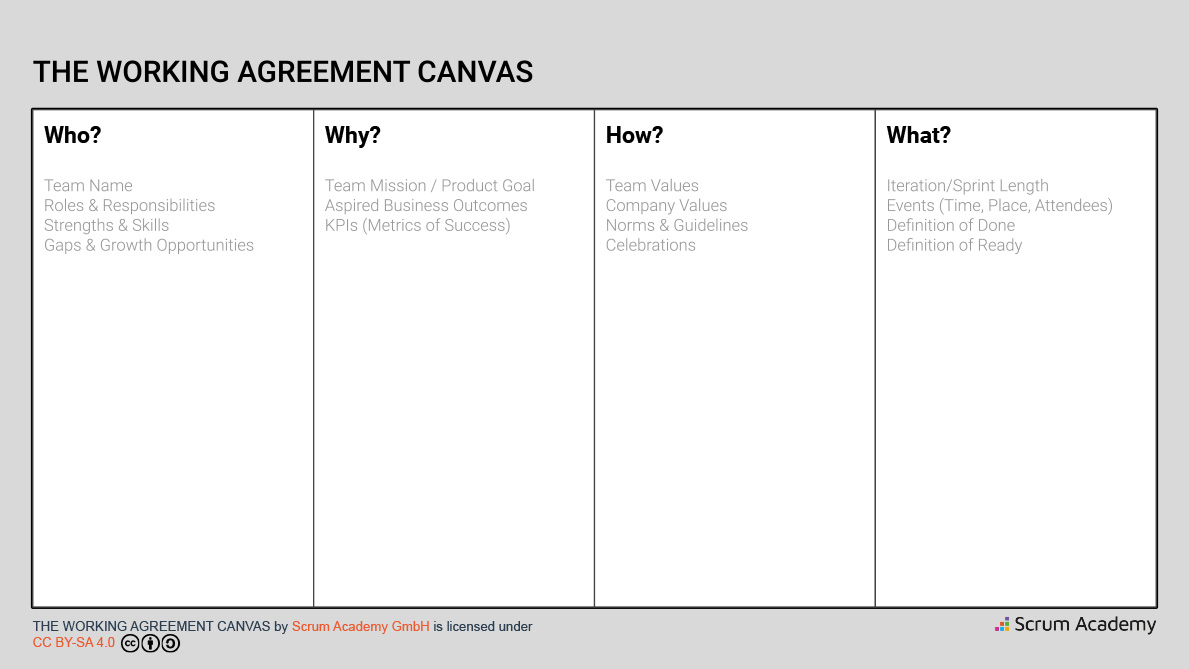
- Meetings - When we meet, how we run them, who attends, how we handle absences, what makes a meeting productive.
- Communication - Response time expectations, which channel for what purpose, availability signals, async vs. sync decision-making.
- Conflict - How we surface disagreement, what to do when we can't reach consensus, escalation paths, how we address violations.
- Decisions - Who has authority to decide what, how we document choices, when to involve the whole team vs. individuals, and critical: what is our tie-breaker mechanism when we can't agree?
- Work Practices - Code review standards, handoff protocols, technical debt handling. (Note: While the Definition of Done covers technical quality, Working Agreements cover the human behaviors around it—e.g., "We don't leave code reviews hanging over the weekend.")
The canvas isn't mandatory, but it's useful for spotting gaps. Teams often create seven agreements about meetings and zero about decision-making authority, then wonder why decisions keep getting revisited.

Jan Neudecker
Scrum Academy GmbH
Jan Neudecker combines deep technological understanding with agile practices and is passionate about teaching Scrum and agility. As an experienced agile coach and trainer, he strives to provide high-quality training to support agile transformation in organizations.
Sohrab Salimi
Scrum Academy GmbH
Expert in Agile Leadership and Organizational Transformation
Sohrab Salimi is the founder and CEO of Agile Academy. For over 20 years, he has helped leaders and organizations worldwide—from startups to Fortune 500s—turn agile principles into real business results. With deep agile expertise, executive-level experience, and a coaching mindset, he supports strategic change with clarity and courage.
Through his Agile Insights Conversations and translations of key agile books into German, Sohrab inspires new thinking and continuous learning.
